What is Nihonga?
The term “Nihonga” emerged during the Meiji period to distinguish it from Western painting that entered Japan. However, its techniques and aesthetic sensibility have a long history dating back to the Heian period. Nihonga is a collective term for paintings created using traditional Japanese materials and techniques, with its characteristics lying in the materials used and methods of expression.
The greatest feature of Nihonga is the use of naturally derived materials. By using materials obtained from nature such as ink, mineral pigments, gofun (crushed oyster shell), and nikawa (animal glue), it creates unique textures and colors. Additionally, it uses washi paper or silk as support, possessing a softer texture different from Western painting canvases.
Materials of Nihonga
Sumi Ink – Infinite Expression of Black
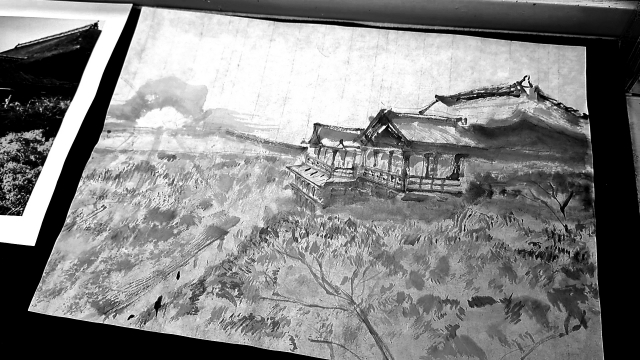
In Nihonga, ink is the most fundamental and important material. Ink, made by kneading soot and glue into solid form, is dissolved in water for use. “Sumi-e” (ink painting), which expresses light and shadow, distance, and even texture using only shades of ink, can be said to be the essence of Nihonga.
Five Colors of Ink: Ink has five gradations called “sho, no, ju, tan, sei” (scorched, dark, heavy, light, clear), known as the “five colors of ink.” Rich colorful expression is possible with ink alone.
Iwa-enogu (Mineral Pigments) – Colors Born from Nature
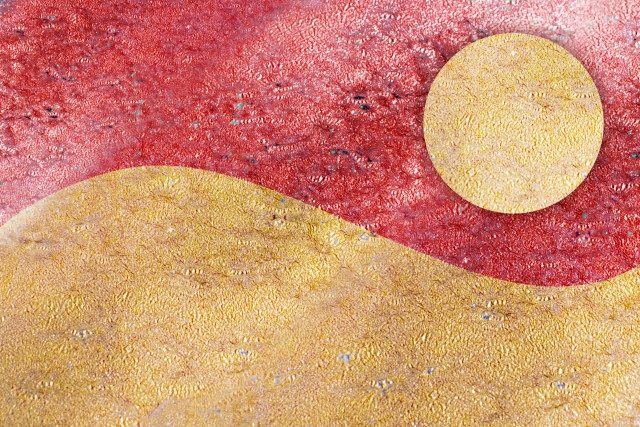
Iwa-enogu are pigments made by crushing natural minerals such as malachite, azurite, and cinnabar. The intensity of color changes depending on particle size, and various color tones can be expressed with the same mineral by different numbers. The characteristics of mineral pigments are their unique texture and deep hues. They change expression depending on how light strikes them and have the advantage of not fading easily over time.
Representative mineral pigment colors include:
- Gunjo (Ultramarine): Deep blue made from azurite
- Rokusho (Green): Vivid green made from malachite
- Shu (Vermillion): Brilliant red made from cinnabar
- Byakuroku (Pale Green): Light green mineral pigment
Gofun – White Born from Shells
Gofun is a white pigment made by burning and crushing shells such as oysters into powder. It is an indispensable material for expressing white in Nihonga and is widely used from creating underlayers to finishing. Gofun is not merely a white pigment; by mixing it with other pigments, it can create soft intermediate colors.
Nikawa (Glue) – Adhesive for Fixing Pigments
Nikawa is a gelatin-based adhesive extracted from animal skin and bones. It is an essential material for fixing mineral pigments and gofun to washi paper or silk. The concentration of nikawa affects the color development and adhesion of pigments, playing an important role in Nihonga production.
Techniques of Nihonga
Tarashikomi
Tarashikomi is a technique of dripping pigment of a different color onto still-wet pigment, allowing them to mix naturally. It is a method of expression that utilizes chance, a technique favored by Rinpa school artists. This technique beautifully expresses natural phenomena such as water flow, mist, and clouds.
Urazaishiki (Back Coloring)
Urazaishiki is a technique of applying color from the back side of silk. When viewed from the front, it creates a soft color expression with transparency. It can be said to be a unique Nihonga technique that utilizes the light-transmitting properties of silk.
Kumadori (Shading)
Kumadori is a technique of depicting the contours and shadows of objects while gradually blending from dark to light colors. It is used to express three-dimensionality and depth, an important technique supporting the delicate expression of Nihonga.
History and Schools of Nihonga
Yamato-e Tradition
Yamato-e, established during the Heian period, can be called the origin of Nihonga. It depicted seasonal landscapes and court life as subjects, expressing uniquely Japanese aesthetic sensibility. Illustrated scrolls such as the Tale of Genji picture scrolls are representative works of Yamato-e.
Introduction and Development of Ink Painting
From the Kamakura period onward, ink painting was introduced from China along with Zen Buddhism. Artists such as Sesshu and the Kano school developed uniquely Japanese ink painting. Ink painting, which expresses nature and the spiritual world using only shades of ink, is deeply connected with Zen philosophy.
Rinpa – World of Decorative Beauty
The Rinpa school, active from the Momoyama to Edo periods, is a Nihonga school rich in decorative qualities. Artists such as Tawaraya Sotatsu, Ogata Korin, and Sakai Hoitsu created gorgeous and refined works using gold leaf and bold compositions. The Wind God and Thunder God folding screen is a masterpiece representing Rinpa.
Establishment of Modern Nihonga
During the Meiji period, with the influx of Western culture, traditional Japanese painting faced a crisis of survival. However, artists such as Okakura Tenshin, Yokoyama Taikan, and Hishida Shunso established modern Nihonga by seeking new expressions while preserving tradition. Through their efforts, Nihonga has been passed down to the present day.
Representative Nihonga Artists
Throughout the history of Nihonga, numerous outstanding artists have been active:
- Sesshu (1420-1506): Muromachi period ink painter. Left masterpieces such as “View of Ama-no-Hashidate”
- Tawaraya Sotatsu (dates unknown): Founder of the Rinpa school. Known for “Wind God and Thunder God”
- Ogata Korin (1658-1716): Representative Rinpa artist. Famous for “Irises folding screen”
- Yokoyama Taikan (1868-1958): Master of modern Nihonga. Established a new technique called morotai (hazy style)
- Uemura Shoen (1875-1949): First female recipient of the Order of Culture. Master of bijinga (paintings of beautiful women)
The Appeal of Nihonga in Modern Times
Even in modern times, Nihonga continues to evolve. Artists who preserve traditional techniques while incorporating new subjects and methods of expression are active. Works that fuse contemporary art methods such as abstract expression and installation with Nihonga techniques are also emerging.
Additionally, Nihonga materials are attracting attention from a sustainability perspective as they are environmentally friendly natural materials. The spirit of Nihonga, which pursues beauty in harmony with nature without using chemical paints, is beginning to hold new value in contemporary society.
How to Experience Nihonga
For those interested in Nihonga, we recommend first viewing actual works at museums. At the Tokyo National Museum, Kyoto National Museum, Yamatane Museum of Art, and others, you can see masterpieces of Nihonga in permanent and special exhibitions.
Additionally, Nihonga classes are held throughout the country, where even beginners can experience production using mineral pigments and ink. By actually touching the materials, you can understand the appeal of Nihonga more deeply.
Conclusion
Nihonga is a uniquely Japanese painting art that has been passed down for over a thousand years using natural materials such as ink and mineral pigments. Nihonga, which values harmony with nature and expresses seasonal transitions and the transience of life, embodies Japanese aesthetic sensibility.
Delicate techniques, deep colors, and spirituality—Nihonga provides viewers with quiet emotion and introspective time. The unique world of beauty, different from Western painting, is an important element in understanding Japanese culture.
For foreign tourists, Nihonga is a precious opportunity to touch the essence of Japanese traditional art. Through museum viewing or participation in experience classes, please feel the profound appeal of Nihonga. A world of beauty that has been passed down across a thousand years awaits you.

![[:ja]日本の伝統的な遊び道具「コマ」ってどんな遊び方をするの?[:en]Koma is a traditional Japanese toy. How do we play? [:]](https://japanese-tradition.com/wp-content/uploads/wordpress-popular-posts/238-featured-15x15.jpg)
![[:ja]九州には魅力的な県がいっぱい!8つの県が集まる九州地方を知ろう![:en]Kyushu with Its Fascinating Eight Prefectures![:]](https://japanese-tradition.com/wp-content/uploads/wordpress-popular-posts/2798-featured-15x15.jpg)
![[:ja]芸者遊びは粋な大人の遊び!ルールを守って楽しく遊ぼう[:en]Geisha games | Innocent fun for adults[:]](https://japanese-tradition.com/wp-content/uploads/wordpress-popular-posts/1359-featured-15x15.jpg)
![[:ja]足袋と草履 - 和装を完成させる足元の美学[:en]Tabi and Zori - The Aesthetics of Footwear Completing Japanese Attire[:]](https://japanese-tradition.com/wp-content/uploads/wordpress-popular-posts/3410-featured-15x15.jpg)
![[:ja]日本のクラシックパンツ「ふんどし」[:en]FUNDOSHI is the underwear of the Japanese style[:]](https://japanese-tradition.com/wp-content/uploads/wordpress-popular-posts/144-featured-15x15.jpg)
![[:ja]歴史的な建物から近代的なものまで!日本の有名な建造物10選[:en]The Top Ten Landmarks in Japan - From the Historical to the Modern![:]](https://japanese-tradition.com/wp-content/uploads/wordpress-popular-posts/2033-featured-15x15.jpg)
![[:ja]日本のレストランで出てくるお冷が全部タダなのはなぜ!?[:en]Ohiya: free water in restaurants?[:]](https://japanese-tradition.com/wp-content/uploads/wordpress-popular-posts/523-featured-15x15.jpg)
![[:ja]日本の文化を支える外国人たち。日本文化を世界に…![:en]Expats supporting Japanese culture. Help spread Japanese culture across the world![:]](https://japanese-tradition.com/wp-content/uploads/wordpress-popular-posts/3013-featured-15x15.jpg)
![[:ja]ビジュアル系ファッション - ロックと美の融合[:en]Visual Kei Fashion - The Fusion of Rock and Beauty[:]](https://japanese-tradition.com/wp-content/uploads/wordpress-popular-posts/3417-featured-15x15.jpg)
![[:ja]竹でできた馬ってな~んだ?~竹馬~[:en]Bamboo stilts (Takeuma)[:]](https://japanese-tradition.com/wp-content/uploads/wordpress-popular-posts/306-featured-15x15.jpg)
