
Katana and Nihonto | The Japanese sword
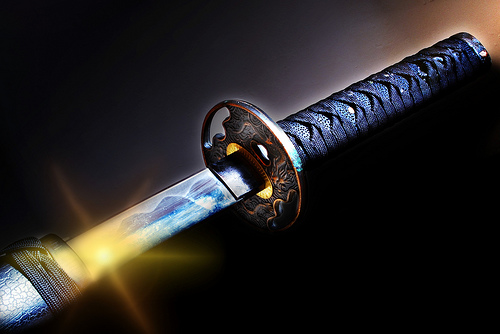
Japanese swords—nihonto—have recently become explosively popular among young female otaku.
Do you still think of them as “a hobby for middle‑aged history buffs,” or something related to “samurai?” “ninjas?”
In reality, we’re now in an era where young women gaze at Japanese swords with sparkling eyes!

The boom began with the online game Touken Ranbu (nicknamed Torabu), in which real historical swords are personified as handsome warriors, and players raise and lead their squads.
In short, it’s a game that anthropomorphizes Japanese swords.
Thanks to this game, more and more women have started visiting museums and exhibitions that house these swords.
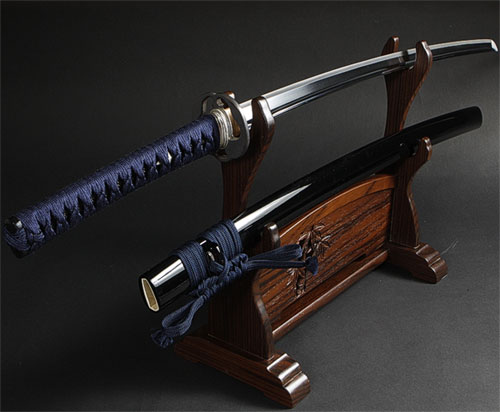
Japanese swords, traditional weapons that have existed since ancient times, are admired not only for their effectiveness as weapons but above all for their beauty—the kind of beauty anyone can recognize at a glance.
The gentle, exquisite curve… the faintly shimmering hamon pattern… the unique appearance each blade possesses.
Even if you’re not an otaku girl, don’t you find them simply beautiful?
People in ancient Japan felt the same way.
Beyond their role as weapons, they valued the beauty of these swords as works of art, passing them down as family treasures.
Many of these masterpieces survive today and are even designated as national treasures.
Another charm of the Japanese sword lies in its perfection as a weapon.
To put it simply: “It doesn’t break, it doesn’t bend, and it cuts extremely well.”
The raw material is iron.
But achieving both “unbreakable” and “unbendable” with iron is incredibly difficult.
The subtle adjustments made through multiple layers of steel, and the meticulous processes repeated over and over—these are techniques only Japanese craftsmen could achieve.
It’s said that no sword in the world matches the Japanese sword in its balance of durability and sharpness.
You might even enjoy watching experiments like “How well does it really cut?” or “Which is stronger, a Japanese sword or ___?”
In fact, during the Muromachi period, the superior performance of Japanese swords became widely known, leading to tens of thousands being exported to China and Korea.
Foreign merchants even traveled to Japan to purchase these blades as valuable works of art.
Japan has many cultural elements that attract global attention, but few have been as renowned worldwide for as long as the Japanese sword.
The more you learn, the deeper the fascination becomes.
Even today, people continue to fall in love with these swords because they are the ultimate masterpieces—perfect both as weapons and as works of art.
“I want to see the sword from my favorite anime!”
“I want to see the real blade used by that historical figure!”
“I want to see a big, cool Japanese sword!”
If that’s your starting point, getting completely absorbed in the beauty of Japanese swords doesn’t sound so bad, does it。








![[:ja]九州には魅力的な県がいっぱい!8つの県が集まる九州地方を知ろう![:en]Kyushu with Its Fascinating Eight Prefectures![:]](https://japanese-tradition.com/wp-content/uploads/wordpress-popular-posts/2798-featured-15x15.jpg)
![[:ja]芸者遊びは粋な大人の遊び!ルールを守って楽しく遊ぼう[:en]Geisha games | Innocent fun for adults[:]](https://japanese-tradition.com/wp-content/uploads/wordpress-popular-posts/1359-featured-15x15.jpg)
![[:ja]“間”の美学とは?日本建築に宿る静寂と余白の精神[:en]The Beauty of Ma: Stillness and Space in Japanese Architecture[:]](https://japanese-tradition.com/wp-content/uploads/wordpress-popular-posts/3354-featured-15x15.jpg)
![[:ja]日本の文化を支える外国人たち。日本文化を世界に…![:en]Expats supporting Japanese culture. Help spread Japanese culture across the world![:]](https://japanese-tradition.com/wp-content/uploads/wordpress-popular-posts/3013-featured-15x15.jpg)
![[:ja]歴史的な建物から近代的なものまで!日本の有名な建造物10選[:en]The Top Ten Landmarks in Japan - From the Historical to the Modern![:]](https://japanese-tradition.com/wp-content/uploads/wordpress-popular-posts/2033-featured-15x15.jpg)
![[:ja]日本の伝統的な遊び道具「コマ」ってどんな遊び方をするの?[:en]Koma is a traditional Japanese toy. How do we play? [:]](https://japanese-tradition.com/wp-content/uploads/wordpress-popular-posts/238-featured-15x15.jpg)
![[:ja]美しい!日本の伝統工芸「てまり」[:en]Temari is Beautiful! Japanese traditional art[:]](https://japanese-tradition.com/wp-content/uploads/wordpress-popular-posts/18-featured-15x15.jpg)
![[:ja]日本のクラシックパンツ「ふんどし」[:en]FUNDOSHI is the underwear of the Japanese style[:]](https://japanese-tradition.com/wp-content/uploads/wordpress-popular-posts/144-featured-15x15.jpg)
![[:ja]竹でできた馬ってな~んだ?~竹馬~[:en]Bamboo stilts (Takeuma)[:]](https://japanese-tradition.com/wp-content/uploads/wordpress-popular-posts/306-featured-15x15.jpg)
![[:ja]日本のレストランで出てくるお冷が全部タダなのはなぜ!?[:en]Ohiya: free water in restaurants?[:]](https://japanese-tradition.com/wp-content/uploads/wordpress-popular-posts/523-featured-15x15.jpg)
